

 Your Daily Dose of Everything Award-Winning Hair Every DaySoftness, shine, and control in one iconic do-it-all formula







What is a Keratin Treatment and How Does It Work?
Updated on June 6, 2025 | 8 min read
Jaclyn LaBadia, Davines Writer
If you have frizzy hair that's impossible to tame, a keratin treatment can help. A keratin treatment will leave your hair silky smooth and glossy for months, and because it alters your hair structure, your strands are left straighter and frizz-free, too. The promise of sleeker hair that’s easier to style, exactly what is a keratin treatment? We’ve got everything to know about keratin ahead — including what it is, how it works, and tips and products to make your treatment last.
Key Takeaways
What a Keratin Treatment Does for Your Hair
- Keratin is a protein that smooths and strengthens hair, reducing frizz and breakage.
- A keratin treatment is a salon process that infuses hair with protein and heat to straighten and smooth it for up to 6 months.
- Benefits include: less frizz, sealed split ends, added shine, and faster styling time.
- Not ideal for everyone — fine, brittle, or highly damaged hair may be at risk. Try our NOURISHING line for gentle haircare.
- Formaldehyde-related ingredients can be released during some treatments; opt for safer formulas and experienced stylists. Find a Professional Davines Stylist near you.
- Aftercare is key: avoid water and styling for 72 hours, use sulfate-free products, and protect hair from saltwater, chlorine, and heat.
- Keratin differs from Brazilian blowouts and Japanese straightening in strength, longevity, and results.
- Keratin-infused products can help maintain the treatment or smooth hair between salon visits.
In This Article
Keratin 101: What It Is and How It Works
Benefits of Keratin Treatments
How Long Does a Keratin Treatment Last?
Is a Keratin Treatment Good For All Types of Hair?
Safety Aspects of Keratin Treatments
How to Maintain Your Hair After a Keratin Treatment?
Keratin vs. Brazilian Blowout vs. Japanese Hair Straightening
Incorporating Keratin Treatments into Your Hair Care Routine
Keratin 101: What It Is and How It Works
Keratin is a natural protein found in your hair, skin and nails. In the case of your hair, keratin is what gives it its strength and resistance to damage. Keratin reinforces the cuticle, smoothing the hair and reducing breakage. Keratin based products are used to strengthen and smooth, prevent frizz and seal ends.
What is a Keratin Treatment?
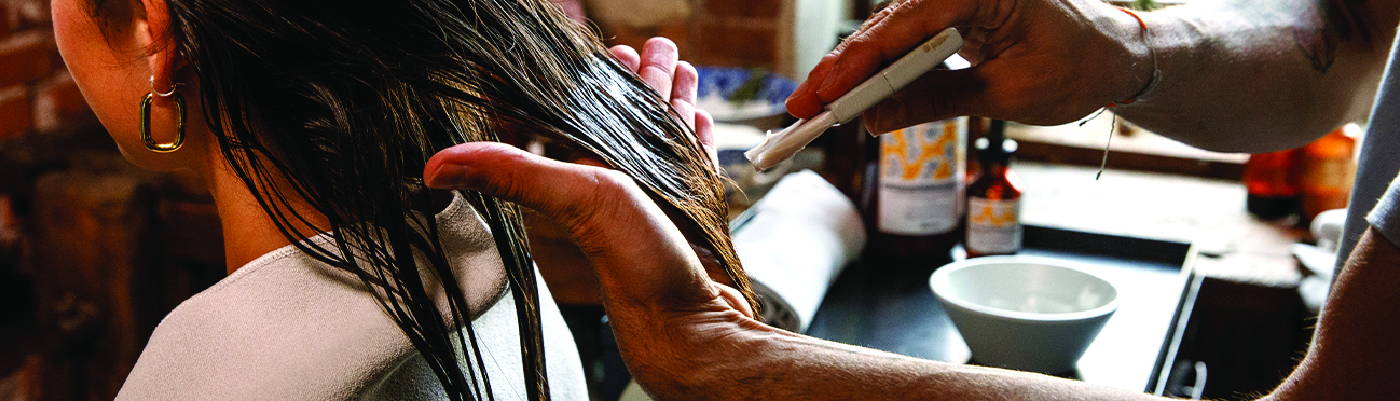
A keratin treatment is an in-salon process that temporarily infuses the hair with protein, altering the structure and straightening it, semi-permanently. Keratin treatments are done by a stylist, and take around 3 hours.
The process consists of:
- Applying a solution of chemicals and keratin to coat your hair with the protein.
- This solution fills any holes in damaged or weakened strands, sealing cuticles and preventing moisture in and out of your hair.
- After sitting and letting the keratin process for about 15 minutes to half an hour, your stylist will dry and seal the treatment with a blow dryer and flat-iron.
- It then gets shampooed out before a keratin sealing serum and final blow-dry.
Benefits of Keratin Treatments
Keratin treatments are especially beneficial for people with frizzy hair. Keratin reduces frizz, adds shine and improves manageability for a smooth long-lasting effect. It also helps to strengthen weak strands, and since it’s semi permanent, it drastically cuts styling time. Here’s a closer breakdown of all the best benefits of a keratin treatment.
- It reduces frizz — Keratin fills in any holes left behind by the initially depleted keratin, smoothing the cuticle.
- It seals split ends and conceals damage — Keratin coats the strands with a protective layer that seals split ends together and disguises broken or damaged hairs
- It improves manageability — By reducing frizz and flyaways with a smoother hair shaft, keratin makes your curls easier to comb through, style and manage.
- It adds shine — Keratin adds noticeable shine to lackluster curls.
- It adds strength — Keratin coats the hair shaft, reinforcing it against breakage and damage.
- It reduces styling time — The reduced frizz, improved manageability and noticeable shine all make your curls easier to style, meaning less styling time overall.
How Long Does a Keratin Treatment Last?
On average, a keratin treatment lasts between 3 and 6 months, depending on your hair type, maintenance and lifestyle. Like with all things, the better care you take of your hair, the longer the keratin will last.
You can extend the life of your keratin treatment by avoiding sulfates, saltwater and chlorine — all of which strip your treatment every time they come in contact with your hair. You can also reinforce your treatment with keratin-infused products like shampoos, conditioners and stylers.
Is a Keratin Treatment Good For All Types of Hair?
While keratin treatments are especially beneficial for people with frizzy hair, they can also be a great option for people who want to make styling curly hair more manageable. Keratin treatments can help turn thick, uncooperative natural curls into smoother, silkier strands for months at a time.
When it comes to color-treated hair, it’s important to note that keratin can lighten your hair by 1-2 tones, so if you're planning to bleach or dye your hair, it's best to do so at least two weeks before or after your keratin treatment. This ensures the pigments are set properly without interfering with the keratin bonding process. Other than that, keratin treatments work really well with colored hair, locking in pigments and adding a protective layer around the hair shaft. However if you have very thin or brittle hair, a keratin treatment is not right for you.
Safety Aspects of Keratin Treatments
A keratin treatment works by breaking down your hair’s bonds and reshaping them. This re-bonds the hair temporarily, making it stronger and smoother. But the reformed bonds are left inherently weaker with a loss of curl pattern and increased risk of damage in the future.
The high heat and chemicals used during the keratin treatment process dry out the hair, making it brittle and prone to breakage. So people with fine or already damaged hair should avoid them, as their strands may not be able to withstand the treatment without damage.
Keratin treatments are often associated with formaldehyde. And while they don’t actually contain formaldehyde, some formulas contain ingredients that release formaldehyde when they are heated or mixed with water. Some salons offer formaldehyde-free versions, but they tend to be less powerful and shorter lasting. It’s important to choose an experienced stylist who understands the keratin treatment process, as well as your hair type, if you decide to get one.
How to Maintain Your Hair After a Keratin Treatment?
The better care you take of your keratin treatment, the longer its effects will last and the healthier your hair will stay. There are several steps you can take to maintain your hair after a keratin treatment.
- Keep your strands away from water and styling products for 72 hours, before washing with a sulfate-free shampoo.
- During that 72 hours keep your hair down and avoid brushing, styling or touching it of any kind, especially using ponytails or clips that can deform your hair before the treatment sets.
- Prolong the keratin in your hair by using high quality keratin infused products and other products for frizzy hair made from natural ingredients to detangle, control, smooth and add shine.
- Avoid harsh ingredients in your products that can strip the keratin, as well as saltwater and chlorine, which can do the same. And if you can’t avoid them, rinse your cold hair immediately after.
- Use heat protection every time you style with heat and sleep on a silk or satin pillowcase to reduce friction and minimize frizz. And finally, keep your hair hydrated with leave-in conditioners and hair masks.
Keratin vs. Brazilian Blowout Vs. Japanese Hair Straightening
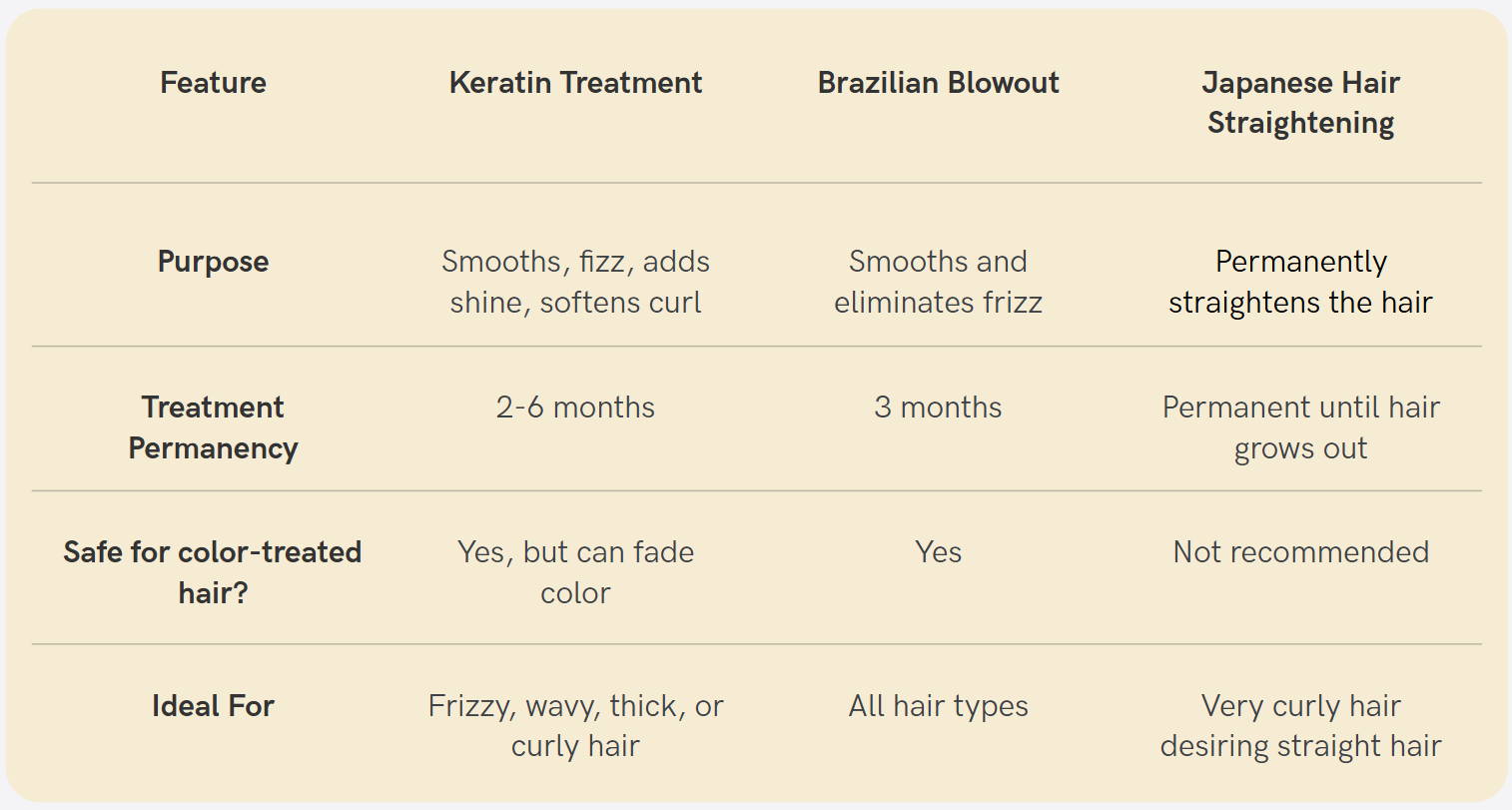
If you're looking to tame frizz, smooth unruly strands, or achieve sleek, manageable hair, you've likely come across several professional treatments that promise dramatic transformations. Among the most popular options are keratin treatments, Brazilian blowouts, and Japanese hair straightening.
While all three aim to make hair smoother and shinier, they differ significantly in terms of ingredients, longevity, results, and maintenance. In the comparison table below, we break down the key differences to help you choose the best option for your hair type, lifestyle, and desired outcome.
Feature
Keratin Treatment
Brazilian Blowout
Japanese Hair Straightening
Purpose
Smooths, fizz, adds shine, softens curl
Smooths and eliminates frizz
Permanently straightens the hair
Treatment Permanency
2-6 months
3 months
Permanent until hair grows out
Safe for color-treated hair?
Yes, but can fade color
Yes
Not recommended
Ideal For
Frizzy, wavy, thick, or curly hair
All hair types
Very curly hair desiring straight hair
Incorporating Keratin Treatments into Your Hair Care Routine
A keratin treatment is the answer to all your frizzy hair care woes. It can take your unruly curls from coarse and flyaway to sleek and smooth, for up to 6 months. It’s one of the most effective ways to straighten hair, reducing frizz and sealing split ends, improving manageability, adding strength and shine and cutting styling time. But keratin treatments can result in a permanent loss of curl pattern and be damaging if not done and cared for properly after.
Remember to:
- Opt for an experienced stylist who understands your hair type and the keratin treatment process explicitly.
- Avoid touching, styling or washing your hair for the first 72 hours after getting treated.
- Use a sulfate-free shampoo when you wash and wash your hair less often, overall.
- Stay away from harsh ingredients in your hair products, and incorporate keratin infused ones where you can.
Using keratin-infused products at home can help strengthen and repair damaged hair, leaving it smoother, shinier, and more manageable. A keratin-based shampoo works to reinforce the hair’s natural structure, while a deep-conditioning mask can boost softness and control frizz. Leave-in treatments, like keratin sealers, help smooth the cuticle, reduce the appearance of split ends, and enhance shine.
Even without a salon treatment, these products can temporarily mimic the effects of professional smoothing services. However, when used to support and extend a professional keratin treatment, the benefits are longer-lasting and more dramatic.
Treat Yourself
Ready to take the next step? Visit a Davines salon to get a specialized keratin treatment from one of our professional stylists.
You Might Also Like...


by Jaclyn LaBadia, featured contributor
Once, Forever 5 looks by Tom Connell to inspire your next salon visit From platinum blonde to bold orange, discover...

by Jaclyn LaBadia, featured contributor
Why choose demi-permanent hair color for your next look Discover the latest The Present Time nuances available at your local...

by Jaclyn LaBadia, featured contributor
The Ultimate Spring Hair Routine 2026: Let Your Hair Bloom Looking to the seasons often brings ample inspiration when it...
Leave a comment
Comments will be approved before showing up.