
 Shop Now Summer FavoritesEnjoy the sunniest season with stylist-approved haircare








Understanding and Treating Dandruff
Updated on June 10, 2026 | 3 min read
Jaclyn LaBadia, Davines Writer
If you are dealing with scalp sensitivity, itching, or flaking, you’re not alone. Dandruff can be difficult not only because of the itching and discomfort, but also because of how visible it seems. Flakes on the scalp, hair, or clothing may make you feel self-conscious, especially in social or professional settings. Although dandruff is common, the concern that others could notice it can make everyday interactions feel stressful.
Davines provides essential haircare products that effectively manage dandruff and scalp sensitivities. Detailed below is everything you need to know about dandruff, including what causes it, how to treat it, and which dandruff shampoos and scalp-care products may help you get relief and build confidence.
Key Takeaways
What to Know About Dandruff
- Dandruff may be common, but the right scalp-care routine can help reduce symptoms.
- Regular shampooing, targeted dandruff shampoo and treatments, and gentle exfoliation can help control buildup and irritation.
- Treating dandruff involves considering stress levels, lifestyle, diet, product use, and scalp-care habits.
In This Article
Defining Dandruff
Symptoms of Dandruff
Causes of Dandruff
How Do You Know if You Have Scalp Psoriasis or Dandruff?
Key Tips for Treating Dandruff
Conquer Dandruff for Healthy Hair
Defining Dandruff
Dandruff is a common, non-contagious scalp condition (pityriasis capitis) characterized by the shedding of excessive white dead skin cells. It is often the result of the body’s inflammatory response to an overgrowth of yeast that naturally lives on the skin.
Dandruff is often accompanied by scalp itching, burning, redness, excessive oil, or rash outbreaks. While dandruff typically affects the scalp, it can also appear behind the ears, in the eyebrows, or in facial folds. According to the National Library of Medicine, dandruff is a highly prevalent scalp condition affecting approximately 50% of the worldwide adult population, with some demographics affected by up to 81-95%.
Symptoms of Dandruff
Symptoms
What it Means
Flaking
Visible white or yellowish flakes are often the most recognizable sign of dandruff. They occur when an irritated scalp sheds skin cells more quickly than usual.
Itching
Scalp itching may appear before visible flakes develop.
Redness
Irritation and inflammation can cause the scalp to look red or feel sensitive.
Burning
Burning, stinging, or a tender sensation may occur when the scalp is inflamed.
Rash
Dandruff may also appear with oily, irritated patches or a greasy, crust-like rash, particularly in more persistent cases.
Causes of Dandruff
- Seborrheic dermatitis: Dandruff is often considered a mild form of seborrheic dermatitis, a condition that causes oily, red, scaly skin. The white or yellow scales can flake off and appear as dandruff. It can occur anywhere oil glands are present, including the scalp, eyebrows, sides of the nose, armpits, and groin.
- Yeast overgrowth: The skin naturally contains a type of yeast called Malassezia. When this yeast overgrows, it can trigger irritation and cause skin cells to shed more quickly than usual, leading to dandruff.
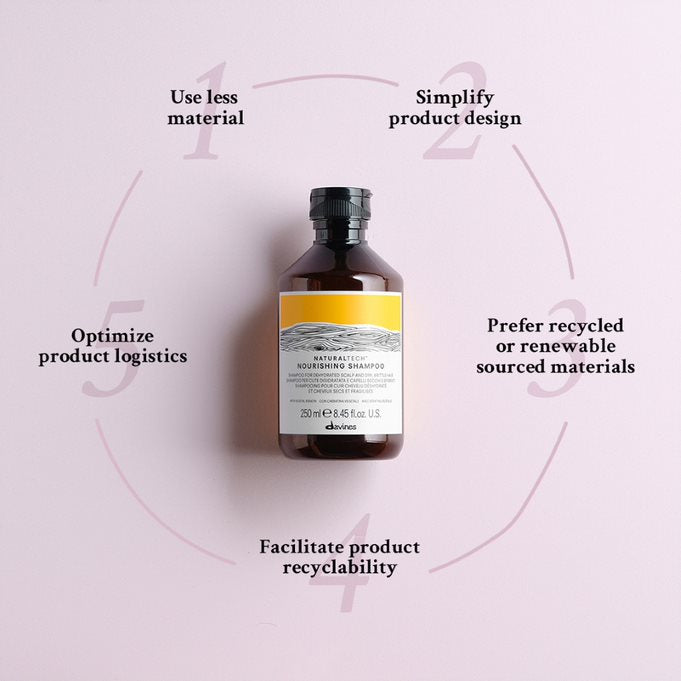
- Dry skin: A dry scalp can cause itching and flaking. Dry scalp occurs when the skin lacks moisture, while dandruff is more often linked to excess oil and buildup on the scalp. For dry scalp, a moisturizing or dry-scalp shampoo or treatment may be helpful, such as Davines NOURISHING Shampoo or ELEVATING Scalp Recovery Treatment.
- Contact dermatitis: Hair care products such as shampoo, styling gel, or hairspray can irritate the scalp and trigger contact dermatitis. This inflammation may lead to burning, itching, redness, and flaking.
- Incorrect shampooing habits: Shampooing too infrequently can allow dead skin cells and hair products to accumulate on the scalp. In some cases, using a shampoo that is not effective enough at removing excess oil may also contribute to dandruff.
- Not brushing regularly: Gentle brushing can help exfoliate the scalp and remove dead skin cell buildup that may contribute to flaking. However, brushing too aggressively can irritate the scalp and worsen dandruff symptoms.
- Stress: If your immune system is compromised from high stress levels, it may trigger Malassezia, resulting in irritation and dandruff.
How Do You Know if You Have Scalp Psoriasis or Dandruff?
Dandruff is easily confused with scalp psoriasis because both conditions produce flaking skin. Psoriasis is an autoimmune disease that can affect your scalp, resulting in scaly patches that can flake off, similar to dandruff. The differences between these two conditions are detailed below.
Dandruff
Psoriasis
Often comes and goes in flare-ups.
Typically chronic and long-lasting.
Usually appears as white or yellowish flakes on the scalp, hair, or clothing.
Often appears as thicker, scaly, or powdery patches that may form plaques.
May cause itching, redness, oiliness, and mild scalp irritation.
May cause redness, inflammation, pain, burning, or tenderness, especially during more severe flares.
Usually limited to the scalp, though it may also affect oily areas such as the eyebrows, behind the ears, or facial folds.
Can extend beyond the hairline to the forehead, neck, or around the ears.
Commonly linked to oil buildup, yeast overgrowth, seborrheic dermatitis, dry skin, or product irritation.
Caused by an autoimmune response that speeds up skin cell turnover.
Often managed with anti-dandruff shampoos or scalp care.
Often requires medical diagnosis and treatment, especially if symptoms are persistent.
Key Tips for Treating Dandruff
The following tips and considerations can help treat dandruff related to both lifestyle and product use.
Tip 1: Examine Your Diet
Poor nutrition and high-carb sugary foods can result in the buildup of glycogen (sugar) on the skin. Dairy foods and those high in sugar may stimulate the sebaceous glands to produce more oil on the skin. If you begin to notice flakes and scalp sensitivity, consider reducing intake of these dietary products.
Tip 2: Create a Regular Shampoo Routine
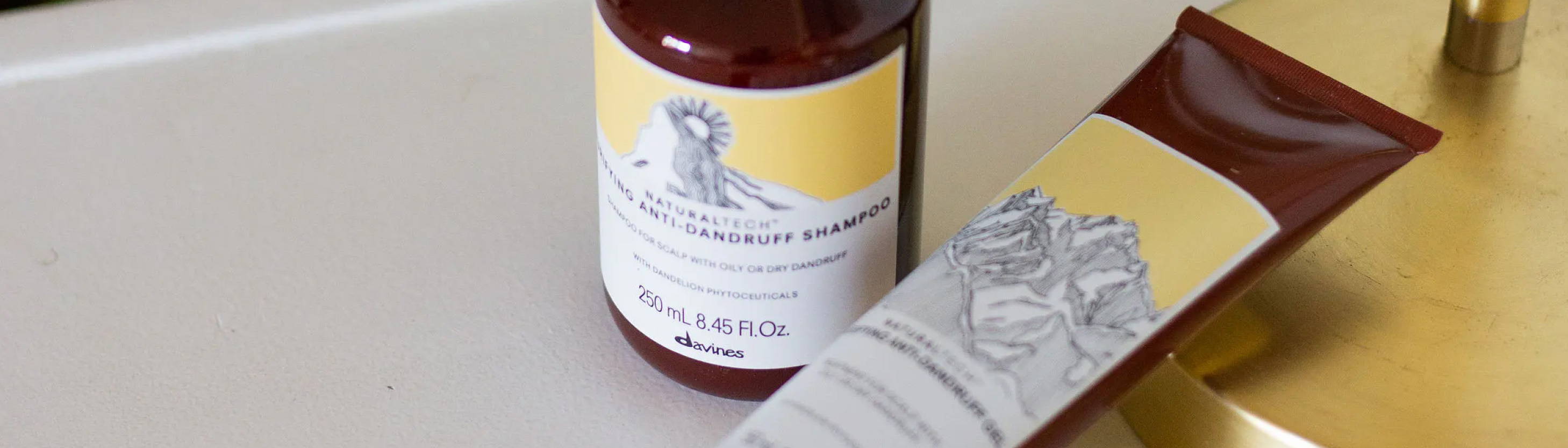
Maintaining a consistent shampoo routine is key. Washing too often can strip the scalp and trigger excess oil production, while washing too little can allow buildup, flakes, and irritation to worsen. Try our PURIFYING Shampoo that clarifies and detoxes with antimicrobial sugars and polyphenols. This anti-dandruff shampoo works to create a healthy scalp that’s flake-free, balancing natural oils to treat both dry and greasy dandruff. For extra care, follow with the PURIFYING Gel, massaging gently and leaving for 10 minutes before rinsing.
Tip 3: Scalp Exfoliation and Treatment
Scalp exfoliation can help remove dead skin cells, excess oil, and buildup that may contribute to flakes. Use a gentle scalp scrub, such as the Davines SOLU Sea Salt Scrub, to exfoliate the scalp, or the Love Your Scalp Set for additional soothing and hydration.
Must-have treatments for dandruff
Reset your hair and scalp with these formulas designed to target dryness, itchiness, and flaking.
Tip 4: Try Apple Cider Vinegar
Apple cider vinegar is sometimes used as a scalp rinse to help reduce buildup and support scalp balance. Dilute a few tablespoons with water, apply after shampooing and conditioning, let it sit for a few minutes, then rinse well.
Tip 5: Avoid Scratching
Scratching can worsen irritation, increase inflammation, and potentially create small breaks in the skin. Instead, use soothing scalp treatments and gentle cleansing to help calm itchiness.
Tip 6: Restyle Your Hair
While treating dandruff, wearing your hair in a ponytail, braid, bun, or updo can help minimize visible flakes and keep them from falling onto clothing. Check out our Messy Bun Tutorial for ways to enhance your updo hairstyle. The addition of a dry shampoo into your routine may help absorb excess oil and assist in hair texture for a volumized, stylish bun.
Conquer Dandruff for Healthy Hair
If you are experiencing an itchy, sensitive scalp, Davines healing and nourishing hair care products for dandruff can help you feel comfortable, confident, and free to enjoy hair that looks and feels its best. To learn more about how to help care for your scalp and build foundational healthy hair, read our post on Scalp Care 101.

Ready for a New Look?
Visit your local Davines salon for customized color, cuts, and care.
You Might Also Like...

by Jaclyn LaBadia, featured contributor
Your product toolkit for frizzy hair If you have naturally frizzy hair, you’ll know how frustrating it can be. The...
by Jaclyn LaBadia, featured contributor
Post-Summer Hair SOS: Davines Autumn Hair Care Favorites Learn about the best tips and haircare products to help you gently...
by Jaclyn LaBadia, featured contributor
Copper Hair: How to Find Your Shade & Keep It Vibrant This Fall Copper hair is fall's biggest color trend....
Leave a comment
Comments will be approved before showing up.