

 Enter to Win Illuminate from WithinWin the Beautiful Things and Heart of Glass routine, plus an in-salon experience!

















Rosemary Water for Hair: How to Make It, Use It and What to Expect
Learn how to make rosemary water for hair, how to use it, how long it lasts, and how it compares to rosemary oil, plus an honest look at the research.
Updated on November 4, 2026 | 3 min read
Jaclyn LaBadia, Davines Writer
There’s a homemade remedy for healthier hair and it’s one of the most talked about trends on social media. Claims that rosemary water can promote hair growth and lead to fuller hair are trending, but is it true? Ahead we discuss rosemary water for hair, including how to make it, the potential benefits and how to use it in your routine.
Key Takeaways
- Rosemary water is a simple infusion of rosemary sprigs and water used as a scalp spray or rinse.
- Most research on rosemary and hair looks at rosemary oil, not rosemary water, so evidence for the water is limited.
- You can make it two ways: a quick simmer or a slower steep (infusion).
- Homemade rosemary water has no preservatives, so refrigerate it and use it within about a week.
- Patch test first, and consider a ready-made scalp serum if you want a no-DIY, consistent option.
In This Article
What Is Rosemary Water?
Rosemary Water for Hair: Claimed Benefits and What the Research Says
Rosemary Water vs. Rosemary Oil: Which Should You Use?
How to Make Rosemary Water for Hair
How to Use Rosemary Water
How Often Should You Use Rosemary Water for Hair?
How to Store Rosemary Water and How Long It Lasts
Patch Test and Safety Tips
FAQs
What Is Rosemary Water?
You’ve likely heard about the hair-loving benefits of rosemary oil, but what about rosemary water for hair? Unlike essential oils for hair growth, which are far more concentrated, rosemary water is a simple infusion of rosemary and water. Fresh or dried rosemary is steeped or simmered in water, then strained and cooled to use as a rinse or leave-in hair treatment. And it’s gone viral as a DIY hair-growth hack , helping to promote stronger, healthier hair that is more resistant to damage.

Rosemary Water for Hair: Claimed Benefits and What the Research Says
Some studies have shown rosemary to be just as effective as minoxidil in treating hair loss. But most of the existing research focuses solely on rosemary oil. The benefits of rosemary water for hair are largely anecdotal. But it’s said to improve blood flow to the scalp, while balancing and hydrating with anti-inflammatory and antimicrobial properties. All of which encourage healthier hair growth. That being said, people with advanced thinning or shedding may benefit from more intense treatments and should see a dermatologist.
Rosemary Water for Hair Growth: Setting Realistic Expectations
By now rosemary water has likely caught your attention. But it’s important to separate the hype from reality. While there’s no scientific evidence supporting rosemary water for hair growth, it can promote overall scalp health. When used consistently as part of a healthy growth routine, alongside products like an energizing superactive, rosemary water helps to reduce breakage and strengthen strands, leading to fuller, stronger-looking hair.
DENSITY BOOST
A leave-in hair density serum for denser, stronger-looking hair.
Supports denser, stronger-looking hair and helps control excess sebum, with hair 4x more visibly fuller in 4 weeks when used with the full routine. A good fit for oily scalps.
Rosemary Water vs. Rosemary Oil: Which Should You Use?
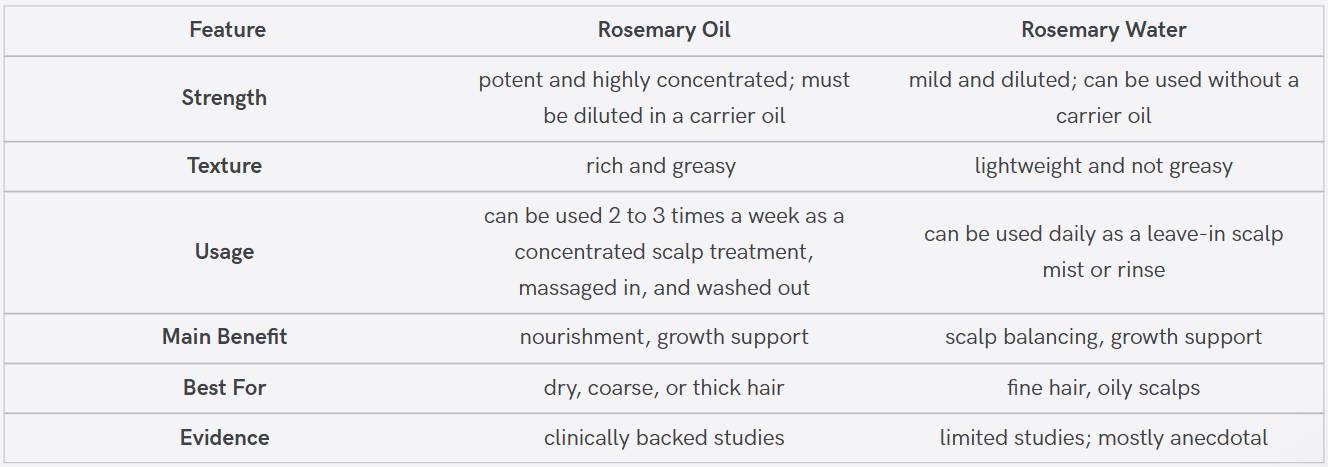
Rosemary water and rosemary oil have similar benefits when it comes to the health of your hair. You can use both in your routine, alternating, rather than stacking one on top of the other. Here’s a quick breakdown of the differences between the two.
Feature
Rosemary Oil
Rosemary Water
Strength
potent and highly concentrated; must be diluted in a carrier oil
mild and diluted; can be used without a carrier oil
Texture
rich and greasy
lightweight and not greasy
Usage
can be used 2 to 3 times a week as a concentrated scalp treatment, massaged in, and washed out
can be used daily as a leave-in scalp mist or rinse
Main Benefit
nourishment, growth support
scalp balancing, growth support
Best For
dry, coarse, or thick hair
fine hair, oily scalps
Evidence
clinically backed studies
limited studies; mostly anecdotal
How to Make Rosemary Water for Hair
Wondering how to make rosemary water for hair? It comes down to just two ingredients: rosemary and water. Specifically, 3-4 fresh sprigs (or 2-3 tbsp dried rosemary) and 2 cups of filtered water. You’ll also need a pot, strainer and clean spray bottle. From there, you can simmer or steep it, following one of these two step-by-step methods.
Simmer Method
- Bring water to a boil
- Add rosemary
- Reduce to a low simmer for roughly 5-10 minutes
- Cover and cool fully (about 25 minutes)
- Strain the liquid into a bottle; the color should be a light amber-green
Steep Method
- Boil water
- Pour it over rosemary
- Cover and steep for several hours or overnight
- Strain and bottle
How to Use Rosemary Water
Once you’ve made a batch, there are a few different ways you can apply rosemary water to your hair. Start by exfoliating with a scalp scrub and washing with a gentle, scalp-focused energizing shampoo. Then use it as a final rinse in the shower, massaging it into your scalp for a minute or two to allow it to penetrate and maximize circulation. Or use it as a leave-in scalp spray on damp hair, by parting your hair and misting the roots in sections, massaging it in. Apply it up to twice a day focusing on the areas where you want to stimulate growth, to leave your scalp feeling refreshed, with an herbaceous, clean scent. If you’re applying it at bedtime, follow with an energizing overnight serum for stronger, more resilient and visibly fuller-looking hair in the morning.
How Often Should You Use Rosemary Water for Hair?
As part of a healthy scalp and hair fullness routine start your rosemary water usage with 2-3 times per week, adjusting based on how your scalp feels. If you experience dryness, itching, or a tight-feeling scalp, scale back. Otherwise, start your rosemary water hair journey with a 2-3 times per week schedule, adjusting based on how your scalp feels. If you don’t experience any dryness, itching, irritation, or a tight-feeling scalp, use it up to twice a day. You may start to notice benefits like reduced itchiness or irritation, in just a few weeks, but typically it takes about 3-6 months to notice visible changes, such as reduced shedding. Sticking to a consistent routine is the key to long-term results.
How to Store Rosemary Water and How Long It Lasts
Make your rosemary water in small batches, or freeze extra in an ice cube tray, thawing one portion at a time. Store it in a clean, sealed bottle in the fridge and use it within about 5-7 days. Get rid of it if it starts to smell off, looks cloudy, or shows any growth.
Patch Test and Safety Tips
Avoid irritation or allergic reactions to rosemary water by starting with a patch test. Put a little behind your ear or inner elbow and wait 24 hours before using it on your full scalp. Keep it away from your eyes and stop using it if irritation occurs. People who are pregnant or have scalp conditions should check with a doctor first. And note that rosemary water may slightly tint very light or blonde hair over time.
FAQs
Does rosemary water actually help hair growth?
While there’s no scientific evidence supporting rosemary water for hair growth, is said to improve blood flow to the scalp, while balancing and hydrating to create the ideal environment for strong, healthy growth.
How long does homemade rosemary water last?
When sealed and stored in the fridge, homemade rosemary water lasts about 5-7 days.
Can I leave rosemary water in my hair overnight?
Yes! You can absolutely leave rosemary water in your hair overnight. In fact, it’s meant to be used as a leave-in treatment.
How often should I use rosemary water on my hair?
Start your rosemary water hair journey by using it 2-3 times per week, adjusting based on how your scalp feels. If you don’t experience dryness, itching, or a tight-feeling scalp, use it up to twice a day.
Is rosemary water or rosemary oil better for hair?
Both have similar benefits for your hair, but only rosemary oil has clinically-backed evidence to support hair growth, so if that’s your ultimate goal, the oil is best. If you’ve got very fine hair or an oily scalp, and/or are looking to reduce breakage and strengthen, for fuller, stronger-looking hair, rosemary water is just as beneficial.
Can rosemary water darken or dry out hair?
Yes, rosemary water can dry out or slightly tint hair over time.

Ready for a New Look?
Visit your local Davines salon for customized color, cuts, and care.
You Might Also Like...


by Jaclyn LaBadia, featured contributor
Burgundy Hair Color: Shades, Who It Suits, and How to Keep It From Fading Explore burgundy hair color shades from...

by Jaclyn LaBadia, featured contributor
Rosemary Water for Hair: How to Make It, Use It and What to Expect Learn how to make rosemary water...

by Jaclyn LaBadia, featured contributor
Hime Cut: What It Is, Who It Suits and How to Style It What is a hime cut? Learn its...
Leave a comment
Comments will be approved before showing up.